Tuesday, January 11, 2011

Eco-Tourism 1 - 76°45'3.54"N 69°50'58.67"W

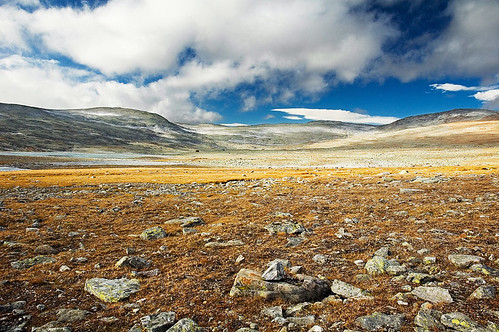
NO TREES IN THE TUNDRA!

The active dirt layer in the tundra is too shallow for the roots of trees penetrate deep enough, therefore the tundra is made up of primarily shrubs, mosses, and other low bearing plants.


Location:  Moriusaq, Greenland; Arctic Tundra

Saturday, January 1, 2011

Plants of the Tundra- 66° 4'10.88"N 165°17'42.78"W

Location: Bering Land Bridge National Preserve, Alpine Tundra 


Although the permafrost makes it difficult for plants to survive, there are some that can. There are lichens, low bearing shrubs, mosses, liverwart, and grasses. There are also 400 species of flowering plants that are able to survive on the rocky soil.
    The plants are adapted to sweeping winds and disturbances of the soil. Plants are usually short and grouped together to bear through the harsh weather. They are able to carry out photosynthesis with little light and low temperatures. Most of the plants reproduce by budding and division rather than flowering.

Arctic Moss: an aquatic plant found growing on the bottom of lakes beds and in and around bogs or fens. It is a very slow growing plant, growing approx. one centimeter per year and shoots living for about seven to nine years.        
Genus: Calliergon                
Species: giganteum


---------------------------------------------------
Rock Willow: grows prostate, shrub, and carpet. It has developed adaptations to bear the cold of the North American Tundra. The arctic willow will produce a pesticide to keep insects away during the growing season.
Genus: Salix
Species: arctica


-------------------------------------------------------------------
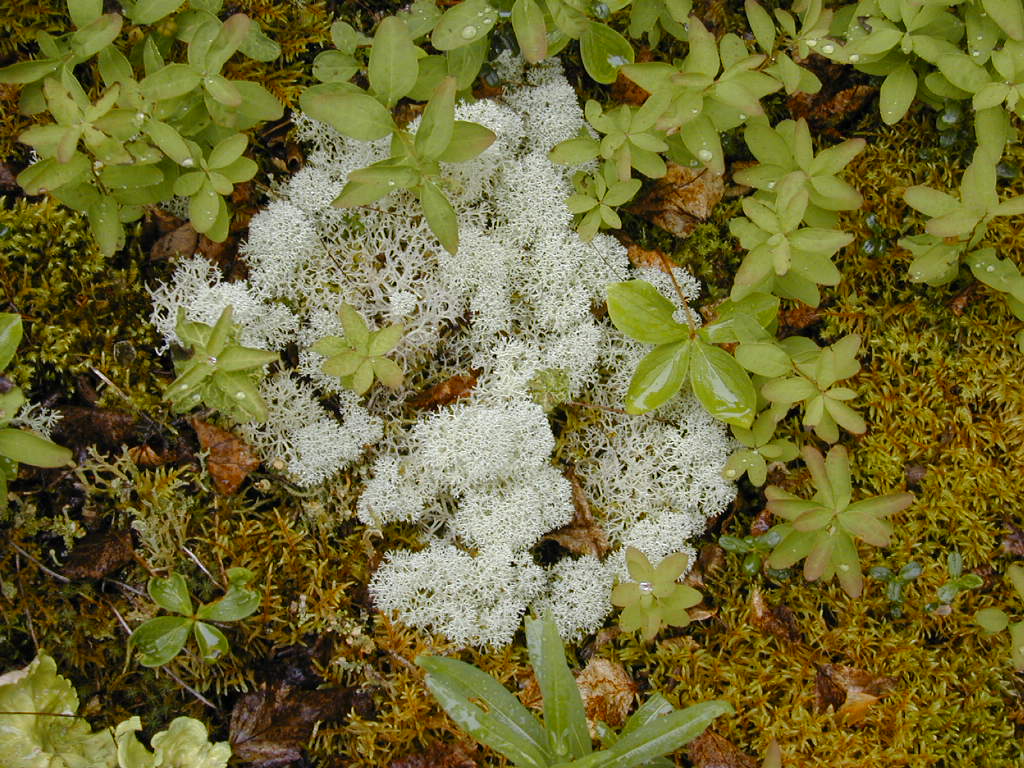
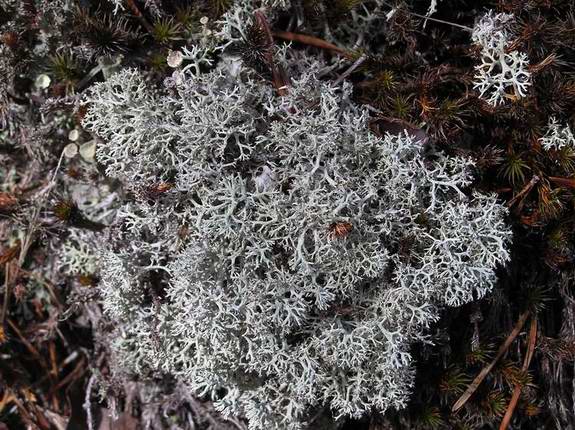
Caribou Moss or Reindeer Lichen: although one of its common names is moss, it is not a moss but a lichen.  Grows in arctic and northern regions around the world. When there is little water or light available, the lichen dries out and becomes dormant.
Genus: Cladonia
Species: rangiferina
------------------------------------------------------------
Tufted Saxifrage: grows on rocky slopes or crevices. Saxifrage has well developed root system for storing carbohydrates, allowing it to respond quickly to the cold changing tundra weather.
Genus: Saxifraga
Species: caespitosa

-------------------------------------------------------------------------
Pasque Flower: only grows on southward facing slopes. Covered in fine silky hairs to insulate it from the harsh tundra cold.
Genus: Anemone
Species: patens

--------------------------------------------------------------------------------------

Friday, December 24, 2010

Arctic & Alpine Tundra Soil - 45°53'44.85"N 68°54'28.39"W

Location: Mount Katahdin, Maine, US; alpine tundra

The soil of the tundra has certain traits that make it very difficult for plants to thrive in.
The little precipitation that falls in the tundra is often snow. The snow will then collect of the surface of the soil and when it melts the layer of permafrost beneath the soil will prevent it from being absorbed. This leaves the surface of the soil wet and soggy with little of the water evaporating because of the frigid air of the tundra.


The previously mentioned characteristics are generalized to fit both types of the tundra, though they do characterize the arctic tundra more so than the alpine tundra.

The alpine tundra is made up of ever changing mountains formed either by volcanoes, the collisions of continental plates, or retreating glaciers and are altered by earthquakes, strong winds, mud slides, and avalanches. Because of these mountains, the active layer of soil in the alpine tundra is not as soggy as in the arctic as the water runs off the mountain sides.

Abiotic Features of the Tundra - 72°58'39.67"N 110°39'25.76"W

Permafrost layer
 Location: Northern Canada


Nonliving factors that shape the tundra biome include:
  • strong winds
  • very little percipitation
  • short growing season
  • long cold winters
  • poor soil
  • permafrost layer

Tuesday, December 7, 2010

Alpine Tundra - Inari, Finland 68°55'25.15"N 27° 3'6.37"E


Finnish Lapland Tundra


                                          Average Monthly Precipitation & Temperature
                       Inari, Finland (Alpine Tundra)

  
                                            Month            Temp (C)          Precipitation (mm)
             Jan                -53                            5  
           Feb               -49                            5
         March             -39                            3
          April              -23                            5
          May               -5                              8
           June                 9                             23
           July                  8                             28
          Aug                  4                             25
          Sept                -3                             13
         Oct               -19                             8
        Nov               -40                             8
        Dec               -49                             5

Data Courtesy of BBC Weather

Arctic Tundras-Verkhoyansk, Russia 67°33'6.16"N 133°22'38.46"E

Verkhoyansk Arctic Tundra
                  
                        Average Monthly Precipitation & Temperature
                        Verkhoyansk, Russia (Arctic Tundra)

  
                                            Month            Temp (C)          Precipitation (mm)
             Jan                -53                            5  
           Feb               -49                            5
         March             -39                            3
          April              -23                            5
          May               -5                              8
           June                 9                             23
           July                  8                             28
          Aug                  4                             25
          Sept                -3                             13
         Oct               -19                             8
        Nov               -40                             8
        Dec               -49                             5


Averages Courtesy of BBC Weather

Friday, December 3, 2010

Unique Characteristic- Permafrost - 35°21'48.52"N 138°43'47.59"E

Location: Mt. Fuji, Japan , Alpine Tundra
Permafrost
            Permafrost is classified as soil that remains below zero degress celsius for two consecutive years.
In summer, it traps a layer of water close to the surface, keeping many tundra soils soggy. It cools the soil and the roots of tundra plants, slowing decomposition and growth. Its presence influences freeze-thaw cycles, forming unique tundra landforms.